Samsung
Two software products. Every piece of the package.
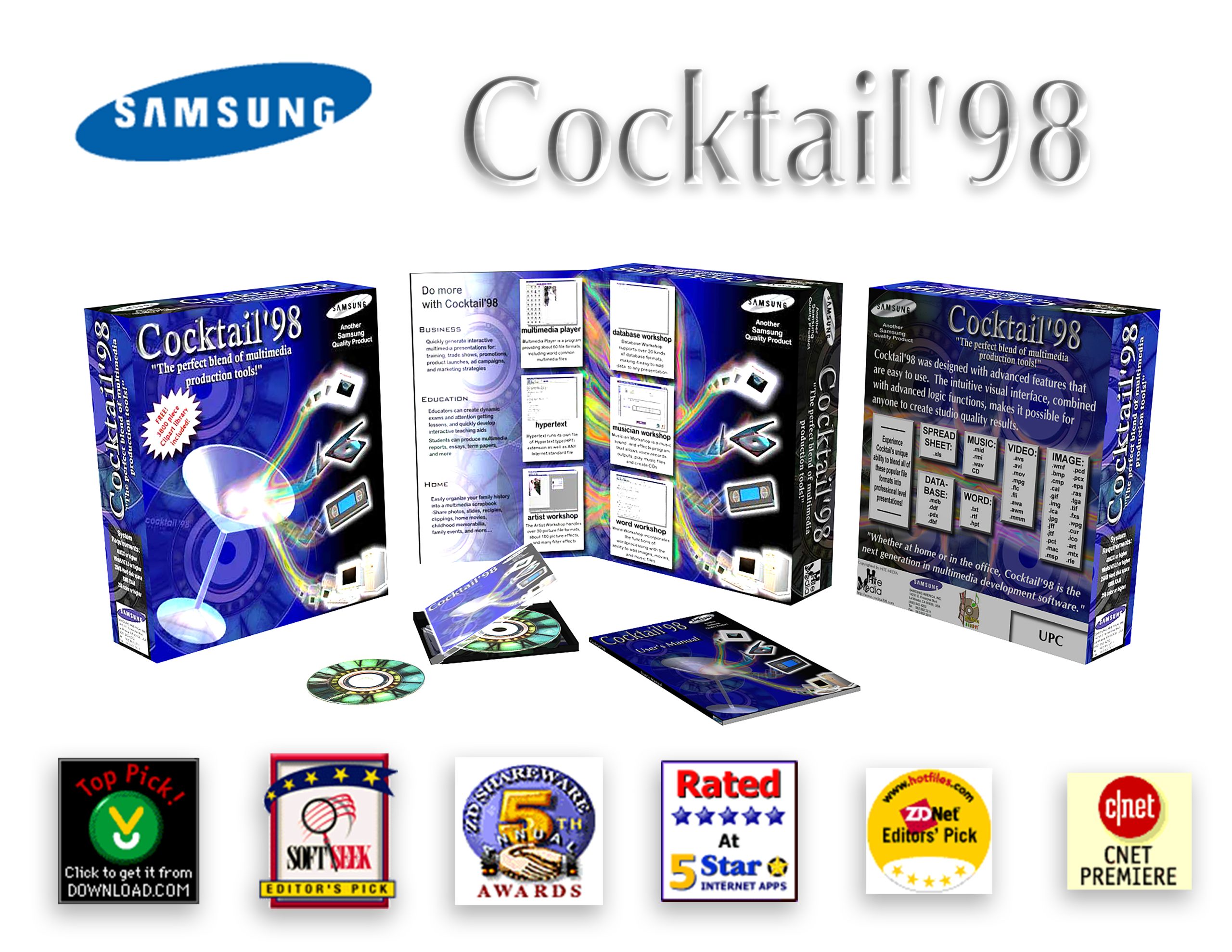
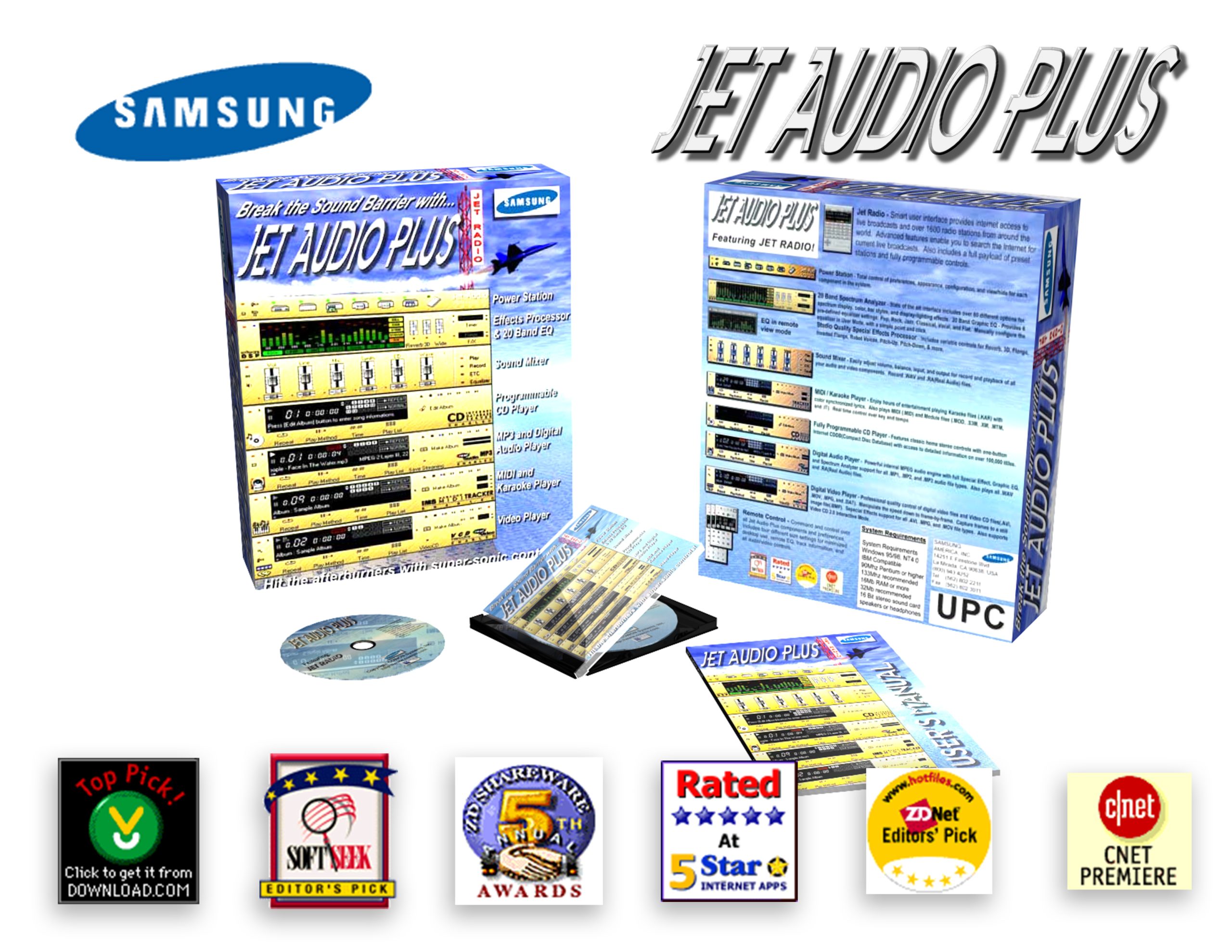
Software may live on a screen, but a retail package has to introduce it before the screen is switched on. For Samsung USA, I worked with the late Joel B. Katz, Director of Marketing, on the complete packaging for Cocktail’98 and, subsequently, JetAudio Plus. These assignments combined concept development, illustration, information layout, package presentation, and production artwork.
The scope reached beyond a front cover. Cocktail’98 included a box with a folding front flap, two CD-ROM discs, two jewel cases, a manual, and templates for die cutting. JetAudio Plus called for its own box, CD-ROM disc, jewel case, manual, and die-and-cut templates. Each component needed to belong to the same product story, even when viewed on its own.
- Samsung USA
- Joel B. Katz
- Software packaging
- Cocktail’98
- Folding-flap retail box
- Two discs and jewel cases
- JetAudio Plus
- Box, disc, and jewel case
- User manual artwork
- Concept development
- Print artwork
- Die-and-cut templates
Cocktail’98: opening the door to multimedia
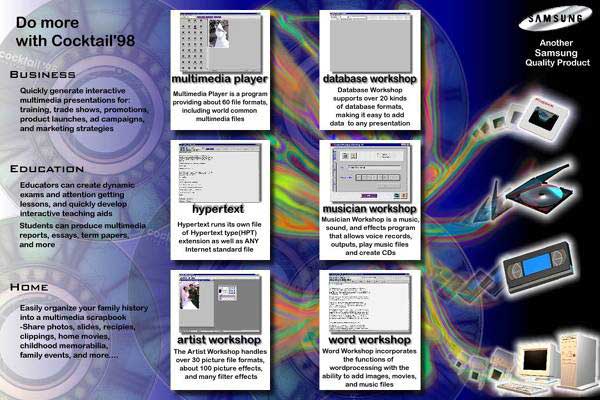
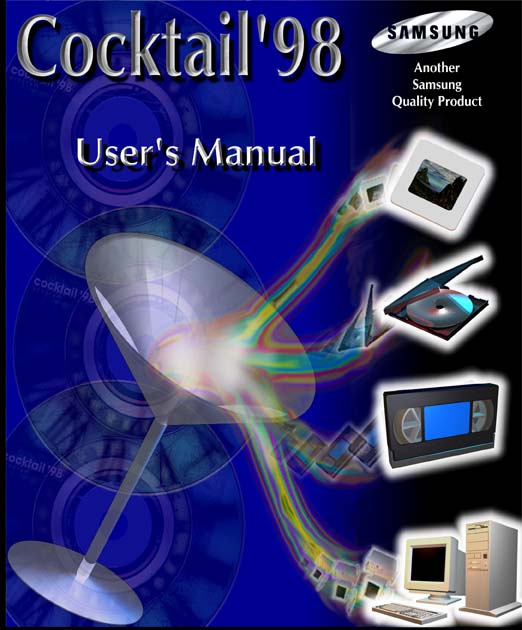
The original Cocktail’98 artwork presents a broad multimedia toolset through an energetic combination of disc imagery, software icons, luminous trails, and blue-purple color. The front provides the first impression. Opening the flap reveals more room for explanation: business, education, and home applications appear alongside the individual software tools.
That additional surface changes the way the package can communicate. A buyer can start with the overall idea, then look more closely at the multimedia player, database workshop, hypertext tools, musician workshop, artist workshop, and word workshop shown in the original artwork. The package offers a visual introduction and a more detailed explanation within the same physical object.
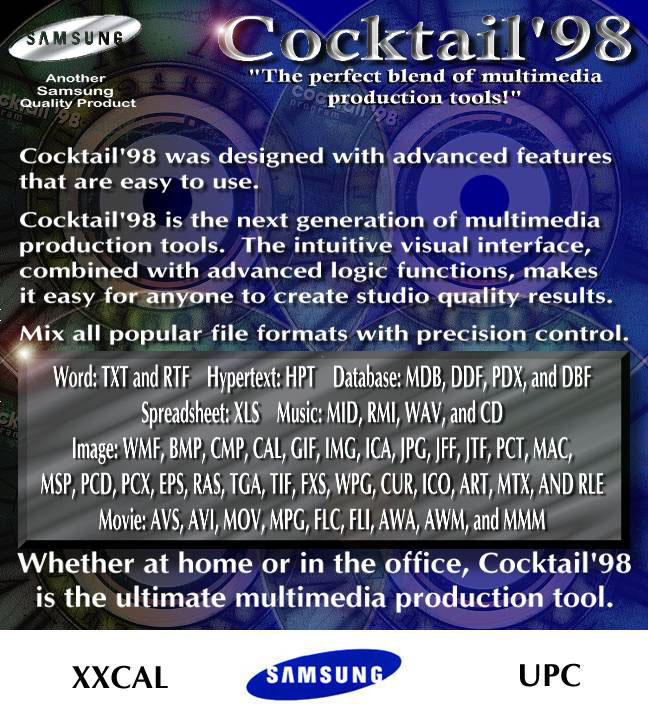
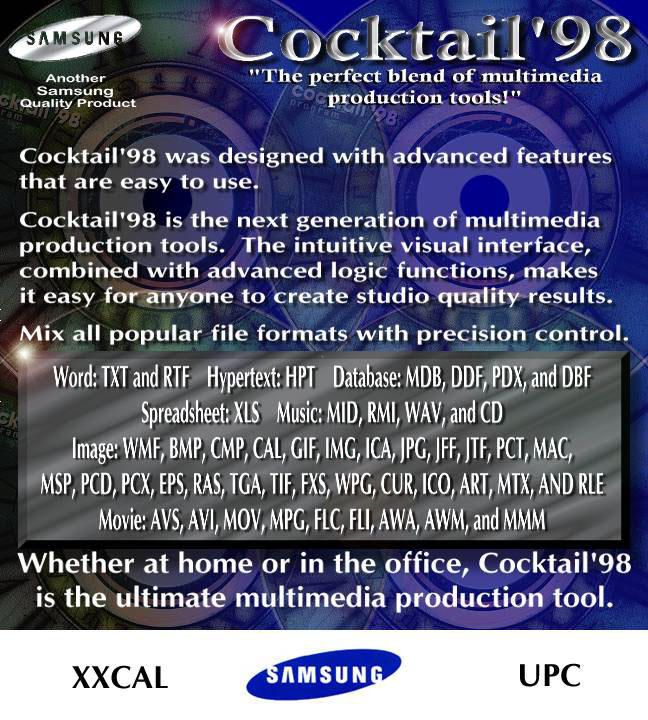
The back panel continues the story with product information and file-format categories. The manual and disc-related pieces carry the design into the contents of the box. The original views below show the closed front, open flap, back panel, and manual artwork, allowing the package to be explored as a complete set.







The concept that helped shape the conversation
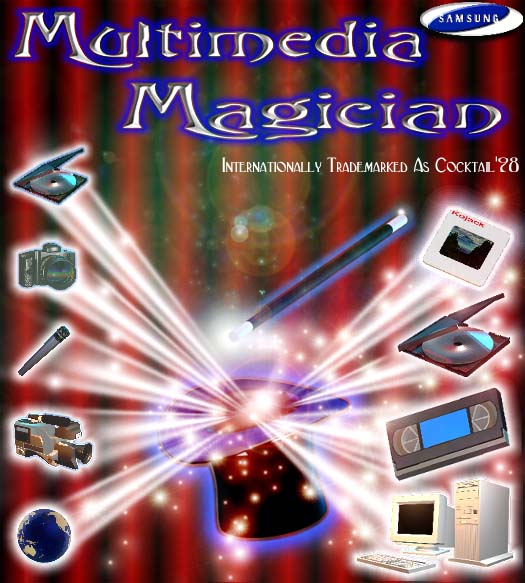
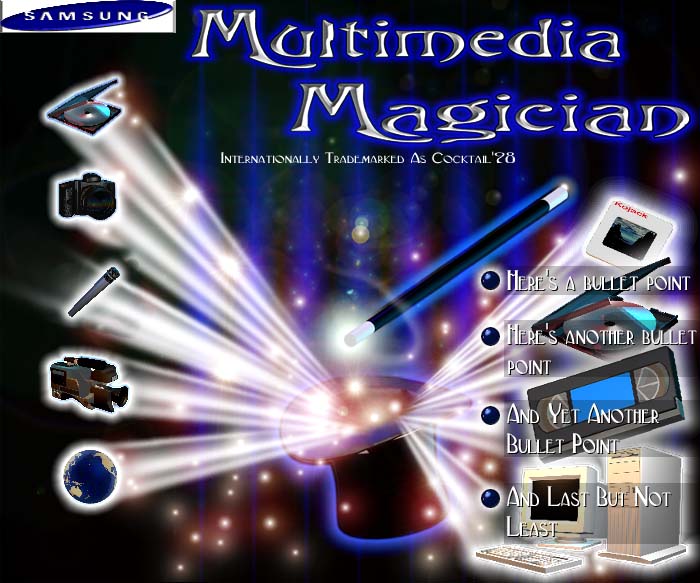
During development, Joel and I explored a proposed “Multimedia Magician” identity. Samsung Korea declined that naming direction, and the product retained Cocktail’98. The surviving concept artwork is part of the project’s creative history: a different way of introducing the same broad collection of multimedia capabilities.
Showing both the proposal and the finished direction gives a fuller account of the assignment. Packaging develops through ideas, discussion, and client decisions. The finished work reflects that process as well as the execution of the selected design.
JetAudio Plus: bringing the interface onto the shelf
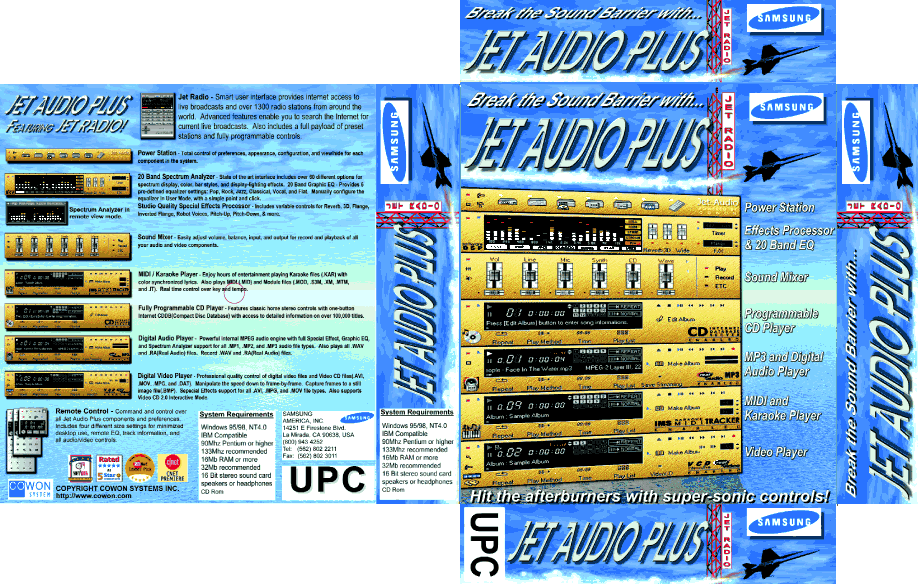
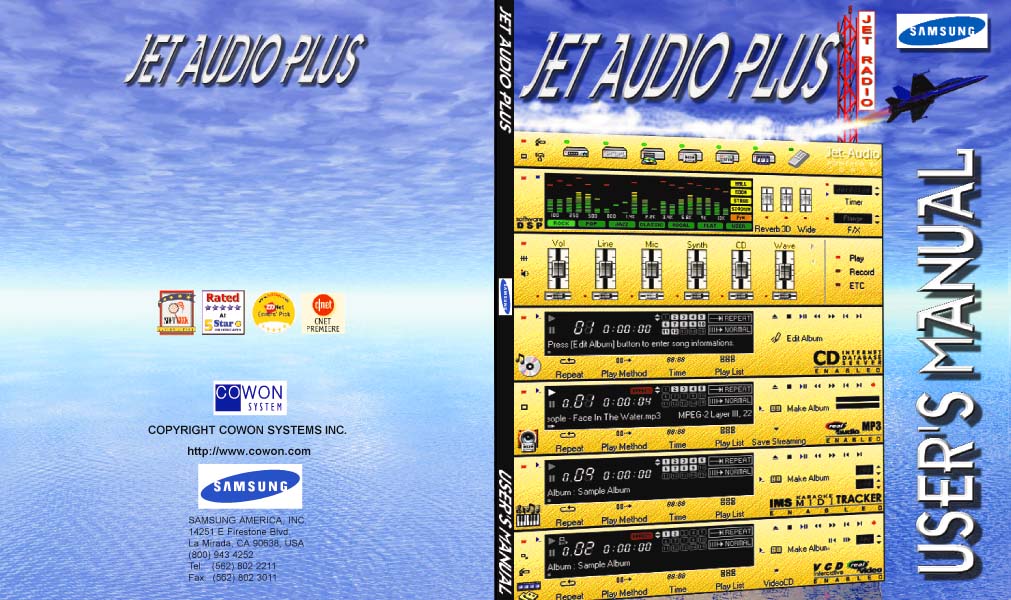
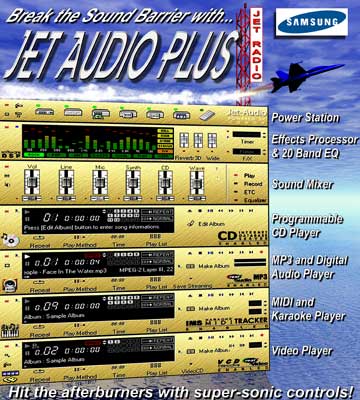
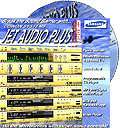
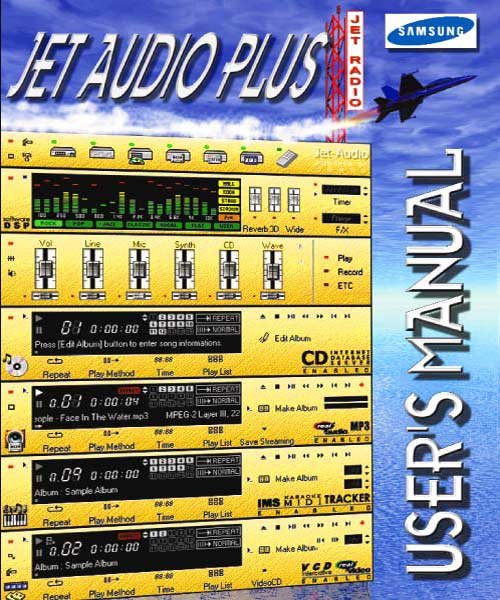
Joel then brought me JetAudio Plus, another complete software-packaging assignment. Its original presentation uses blue sky imagery and prominent yellow audio controls to put the software’s interface at the center of the design. The box makes the components visible: an equalizer, mixer, players, and other controls arranged like a connected audio system.
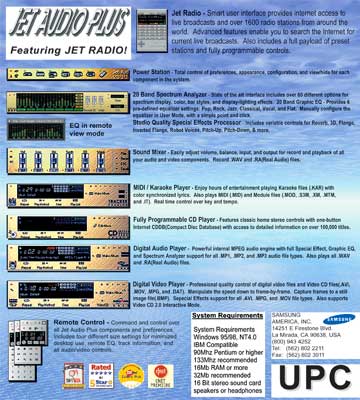
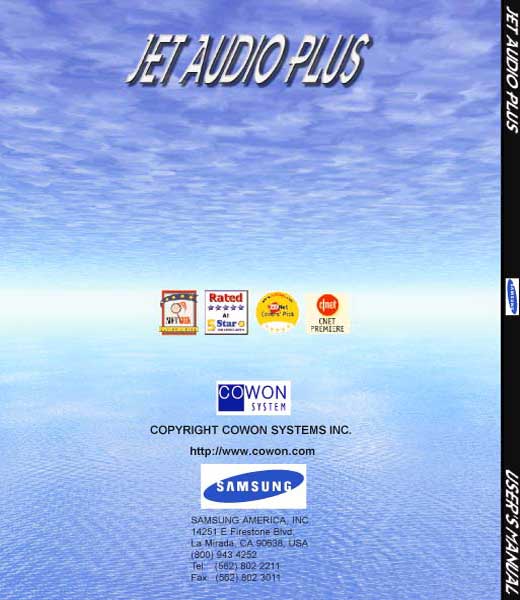
The front establishes that visual language. The back offers more explanation of the individual functions, and the disc, jewel-case artwork, and manual continue the same treatment. The package and its contents can be recognized as one product while each piece supplies a different kind of information.
The production archive also contains the unfolded box artwork. It provides a closer view of the relationship between the front, back, side panels, product information, and supporting marks before those surfaces become a three-dimensional package.


From a promising idea to a complete presentation
These projects brought brainstorming and detailed execution together. The concept needed enough character to attract attention, and the package needed enough information to explain what was inside. The discs, cases, manuals, and production templates then extended the same design through the full set of deliverables.
The original presentation sheets below bring the components together. They show the relationship between the printed surfaces and the finished package forms, providing a broader view of the work than an isolated box cover.