
GRANT GARRISON LTD. / ORBITAL DOSSIER 004
ORBITAL UX
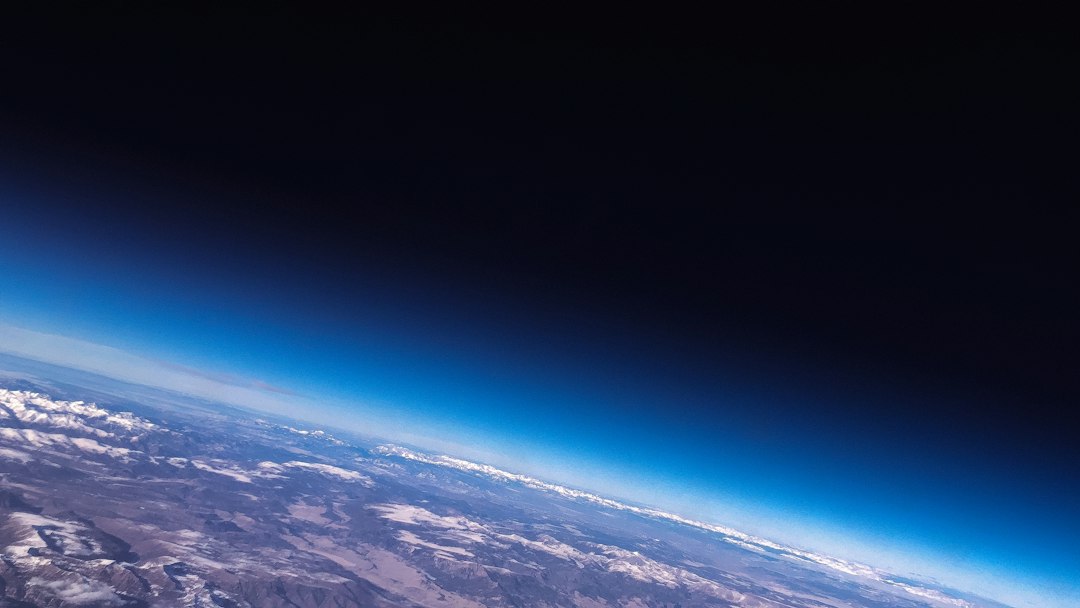
Space is becoming a software industry, and the interface is roughly 250 miles above your head.

01 / SPACE HAS AN INTERFACE NOW
The romantic picture of space technology is hardware: rockets, capsules, antennas, heat shields and enormous clean rooms. Hardware still matters enormously, but the industry is increasingly defined by what happens after the machine reaches orbit. Satellites are software platforms. Constellations are networks. Earth observation is a data product. Mission operations look increasingly like cloud operations with radically more expensive failure modes.
That shift matters because it opens space to disciplines that once seemed terrestrial. Interface designers, data storytellers, cybersecurity teams, AI researchers, product strategists and filmmakers all have something to contribute to an orbital economy.
02 / THE PLANET BECOMES A LIVE DATASET
Earth-observation systems can turn physical change into streams of information: weather, crops, shipping, fires, construction, oceans and infrastructure. The difficult part is not simply collecting pixels. It is converting those pixels into decisions.
A beautiful map is not enough. The system needs to tell a user what changed, whether it matters, how confident the system is and what action should follow. That makes orbital data a design problem as much as a sensing problem.
The satellite may be in orbit. The product still has to make sense at a desk.
03 / THE NEW STACK GOES VERTICAL
Think of the emerging stack as layers: physical spacecraft, communications, ground infrastructure, data processing, models, APIs and finally human-facing products. Innovation can happen at every layer. A company does not necessarily need to build a rocket to build something valuable for space.
This is one reason investment signals around space technology remain interesting in 2026. The opportunity is not one monolithic moonshot. It is an expanding collection of services built around connectivity, sensing, navigation, manufacturing and intelligence.

04 / WHAT DESIGNERS SHOULD STEAL FROM MISSION CONTROL
Mission control has always understood something consumer software occasionally forgets: state matters. What is happening now? What changed? What is nominal? What requires intervention? What can wait?
Those questions produce interfaces that prioritize hierarchy over decoration. The lesson translates beautifully to dashboards, studios, autonomous systems and any product where the user needs to understand a complex situation quickly.
05 / SPACE NEEDS BETTER STORYTELLING
The industry also has a communication problem. Many of its most important products are invisible, technical or abstract. A satellite service may improve logistics or climate analysis without giving the customer a dramatic object to hold. That means visualization and editorial storytelling become strategic tools.
Show the orbit. Show the before and after. Show the data moving. Show what the system noticed that a person could not have seen alone. The story should connect the physics to a human consequence.
06 / SIX SIGNALS TO WATCH
- AI-assisted Earth observation and automated anomaly detection.
- Software-defined spacecraft that can change behavior after launch.
- More commercial tools built on top of orbital datasets.
- Space-domain cybersecurity becoming a mainstream design constraint.
- New interfaces for operating fleets rather than individual satellites.
- Creative visualization that makes orbital systems understandable to non-specialists.
07 / THE SHARPER-IMAGE TEST
There is a useful creative test for frontier technology: can you explain the magic without removing the mystery? Great consumer technology has always balanced those two forces. It gives you enough understanding to desire the object, but enough wonder to make the experience feel larger than a specification sheet.
Space technology is perfect material for that treatment. It contains extreme engineering, beautiful imagery, planetary scale and genuine utility. The editorial opportunity is to connect all four.
AUDIO COMPANION
VIDEO COMPANION
THE LAST WORD
Space is still an engineering frontier, but it is also becoming a product frontier. The next remarkable orbital company may win not only because its hardware survives launch, but because its software turns impossible scale into an experience a human can understand.
The cloud is no longer a metaphor. Some of the infrastructure really is above the clouds.
GRANT GARRISON LTD. / Creative. Technical. Cinematic.